2026 Antarctic Ozone Hole Ranks Seventh Largest in 48 Years
Despite atmospheric conditions, Earth's protective ozone layer remains on track for long-term recovery, according to NASA and NOAA.
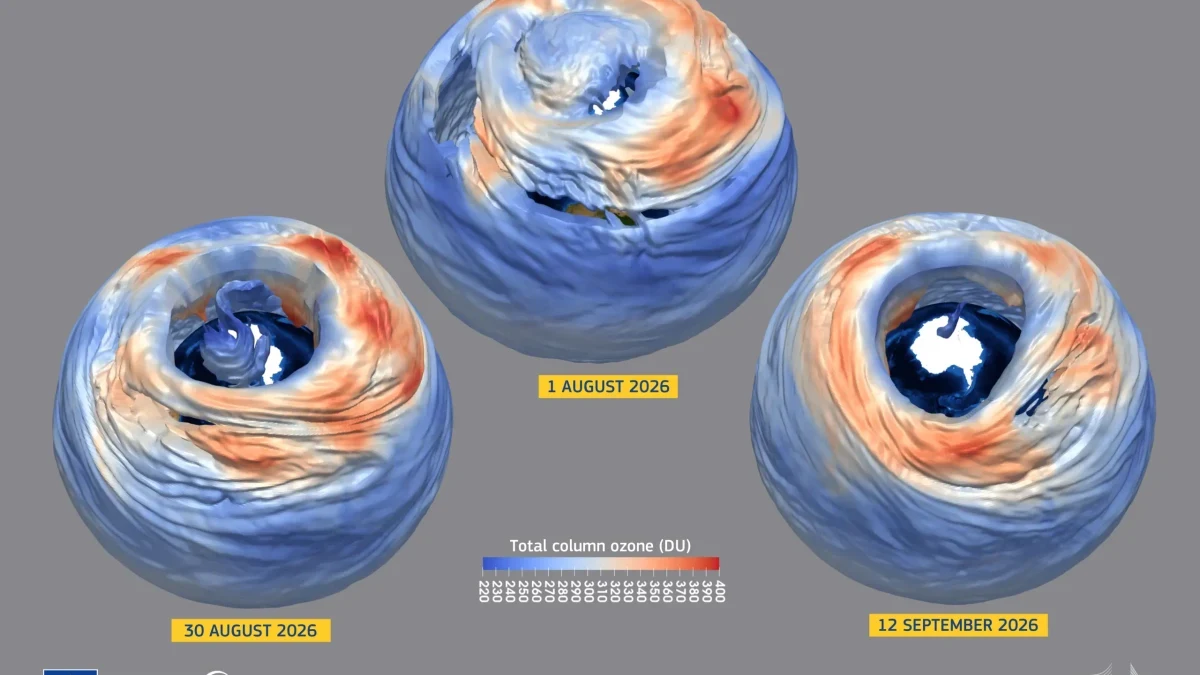
The 2026 Antarctic ozone hole, monitored by NASA and the National Oceanic and Atmospheric Administration (NOAA), ranked seventh largest by area in 48 years. The hole covered about 9.6 million square miles (25 million square kilometers) at its peak, from Sept. 7 to Oct. 13. Despite its size, the hole was not as deep as other large holes on record.
Scientists continually track the amount of ozone in the stratosphere because it acts as the Earth's sunscreen, shielding life from harmful solar radiation. The ozone hole is defined as the area where ozone concentrations drop below the historical threshold of 220 Dobson units. The ozone hole reached its greatest one-day extent for the year on Sept. 18 at 10.5 million square miles (27.1 million square kilometers).
Sources2
Reporting and evidence linked in this story.
- NASA — EarthNASA, NOAA Track 2026 Antarctic Ozone Hole
- www.newser.comAntarctic Ozone Hole Grows to 10-Year High
Claim connections2
The 2026 Antarctic ozone hole ranked seventh largest by area in 48 years of monitoring.
confirmedConnected sources1
The ozone hole covered about 9.6 million square miles (25 million square kilometers) at its peak.
confirmed