New Study Links Supermassive Black Hole Jets to Slowed Star Formation in Galaxies
A new study demonstrates that jets from supermassive black holes can heat gas at the edges of galaxies, a process that reduces the rate of star production over time.
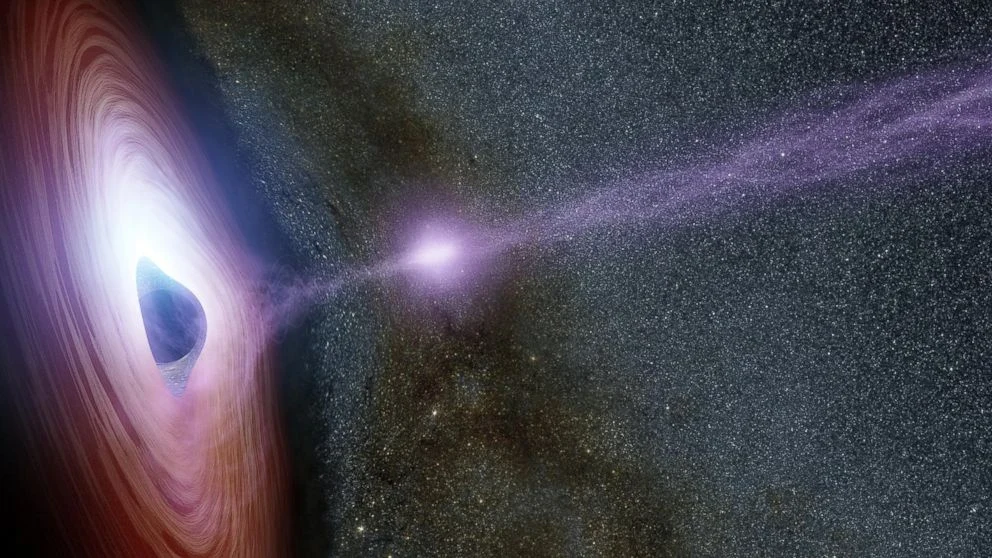
Researchers have presented new observations indicating that supermassive black holes influence their host galaxies beyond just powering energetic jets that extend far into space. These powerful outflows are known to reach distances well beyond the boundaries of the galaxy containing the black hole.
The study specifically identifies a mechanism by which these black holes warm the material located at the outer edge of a galaxy. By heating this surrounding gas, the black holes interfere with the conditions necessary for new stars to form, thereby reducing the rate of star production over long periods of time.
This finding highlights the ongoing feedback loop between supermassive black holes and their galactic environments. By understanding how these jets stir up and heat external material, astronomers can better account for the factors that limit star formation in the later stages of a galaxy's evolution.
Sources1
Reporting and evidence linked in this story.
Claim connections2
Supermassive black holes power tremendous jets that extend far beyond their galaxy.
confirmedConnected sources1
A new study finds how supermassive black holes can warm material at the outer edge of a galaxy and reduce the rate of star production over time.
confirmed