Indonesia's Stock Market Loses $65 Billion as MSCI Proposes Rare Downgrade to Standalone Status
MSCI's proposal to reclassify Indonesia from emerging to standalone market sent the Jakarta Composite crashing 11.6% on Oct 16, erasing roughly $65 billion in value. Indonesian officials have rejected the assessment and called for methodological transparency.
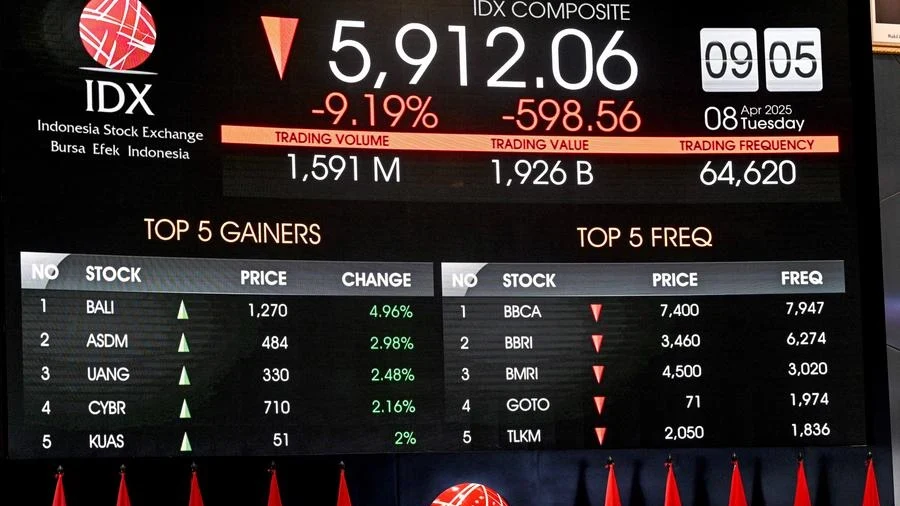
Indonesia's stock market suffered its sharpest single-day decline since the 1998 Asian financial crisis on Oct 16, 2026, after global index provider MSCI proposed downgrading the country from "emerging market" to "standalone" status. The Jakarta Composite Index dropped 11.6 percent, wiping approximately US$65 billion off market valuations, according to Channel News Asia reporting. The proposal represents a more severe reclassification than MSCI's initial January warning that Indonesia could be demoted to "frontier market" status.
Only three other markets have experienced a double downgrade from emerging to standalone since 1997, underscoring the rarity of the action. MSCI stated that Indonesian authorities had failed to demonstrate "sufficient progress" in the consistent implementation of market reforms and their sustained impact, citing weak enforcement of market rules as a persistent concern. Tan, an analyst consulted by CNA, noted that demoting Indonesia to frontier rather than standalone would simply transfer unresolved underlying issues into another MSCI index, which could prove more disruptive by removing Indonesia from the emerging market index without offsetting inflows from frontier index funds.
Indonesian officials have pushed back sharply against the proposal. President Prabowo Subianto told his Cabinet that MSCI was attempting to "intimidate" the country. Hanif Dhakiri of the National Awakening Party, who sits on the parliamentary finance committee, told Reuters that Indonesia should not accept judgements without examining their basis and objectivity, calling for MSCI's methodology to be transparent, objective and consistently applied across countries. In response to the proposal, Indonesia's Financial Services Authority disclosed fines of millions of dollars for market participants involved in trading violations, including three companies that MSCI had previously cut from its index.
A standalone classification would carry significant consequences for Southeast Asia's largest economy. MSCI classifies global equity markets into four categories—developed, emerging, frontier, and standalone—and about US$10 trillion in assets are benchmarked against its Emerging Markets Index. If implemented, the downgrade could trigger billions of dollars in foreign outflows as international funds sell Indonesian equities to align portfolios with MSCI's revised classifications. Indonesia has held emerging market status since 1989. The downgrade is not yet final; MSCI has given Indonesia time to demonstrate meaningful and lasting improvements before reaching a final decision next year.
Sources1
Reporting and evidence linked in this story.
- Channel News AsiaWhy is Indonesia facing a rare MSCI downgrade and what's at stake?
Claim connections4
MSCI proposed downgrading Indonesia from emerging market to standalone status on Oct 16, 2026, prompting an 11.6 percent plunge in the Jakarta Composite Index and approximately $65 billion in market value losses.
confirmedConnected sources1
Only three other markets have faced a double MSCI downgrade from emerging to standalone status since 1997.
confirmedConnected sources1
President Prabowo Subianto said MSCI was trying to intimidate Indonesia, and Hanif Dhakiri called for transparent and objective methodology.
confirmedConnected sources1
Indonesia has been an MSCI emerging market since 1989 and about $10 trillion in assets are benchmarked against MSCI's Emerging Markets Index.
confirmed