Madrid shepherds guide historic Transhumance festival through crowded streets
A flock of 1,250 sheep and 160 goats moved through central Madrid in a traditional procession marking the centuries-old practice of moving livestock between seasonal pastures.
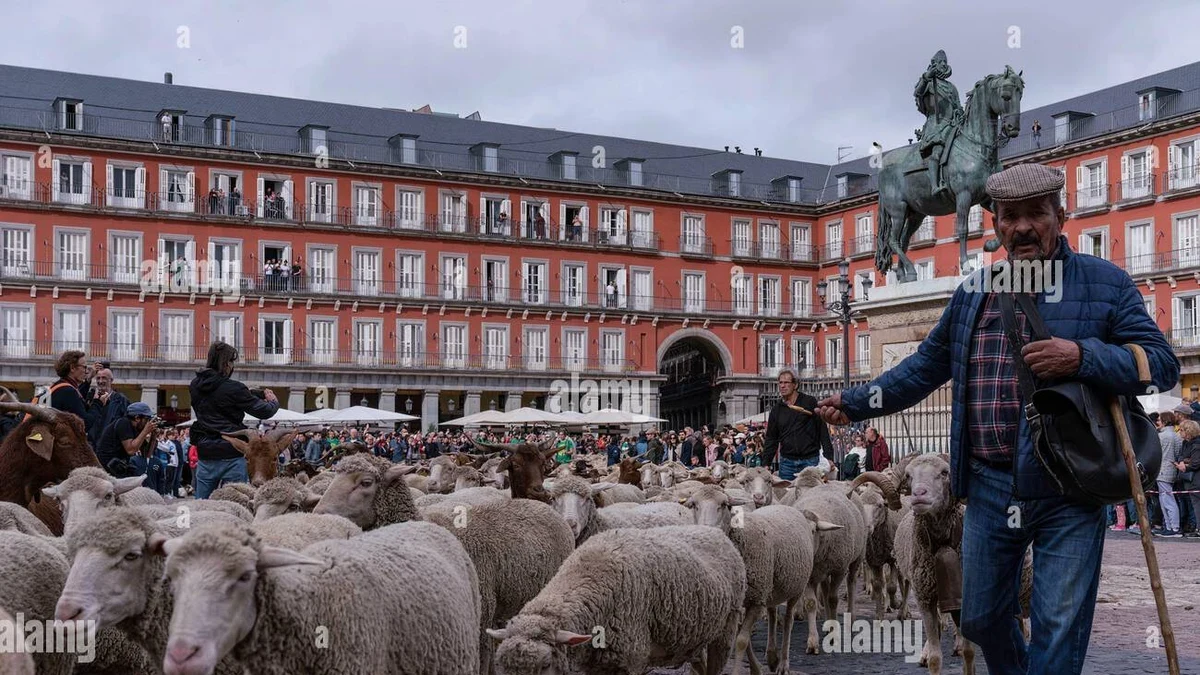
A flock of 1,250 sheep and 160 goats set off from Casa de Campo, crossing the Puente del Rey and advancing through the historic centre of Madrid. The movement was part of a public festival where the animals filled streets and squares typically dominated by car traffic.
The procession featured shepherds wearing traditional dress, with some carrying young lambs or offering treats to the animals. Folk musicians accompanied the group, contributing to the festive atmosphere while residents and tourists gathered to watch and take photographs.
The event highlights transhumance, a centuries-old practice of moving livestock between summer and winter pastures. Euronews noted that officials also performed a symbolic ceremony at Plaza de la Villa, commemorating a traditional payment first recorded in 1418. This year’s route was altered to avoid the Puerta del Sol, which is currently the site of a protest camp by housing campaigners.
Beyond serving as a celebration of rural heritage, the practice carries environmental benefits. Euronews explained that the animals help reduce flammable undergrowth by consuming vegetation, which in turn lowers the risk of wildfires in the region.
Sources1
Reporting and evidence linked in this story.
Claim connections4
The festival involved a flock of 1,250 sheep and 160 goats that set off from Casa de Campo and crossed the Puente del Rey.
confirmedConnected sources1
The Transhumance festival includes a symbolic ceremony at Plaza de la Villa commemorating a traditional payment dating from 1418.
confirmedConnected sources1
The traditional Transhumance route was altered this year to avoid Puerta del Sol due to a protest camp established by housing campaigners.
confirmedConnected sources1
The practice of moving livestock between pastures provides environmental benefits by reducing flammable undergrowth and wildfire risks.
confirmed