NASA Volunteers Exit Year‑Long Mars Simulation After 378 Days
Four volunteers leave Houston’s Mars Dune Alpha habitat after a 378‑day isolation experiment, providing NASA with critical data for future crewed Mars missions.
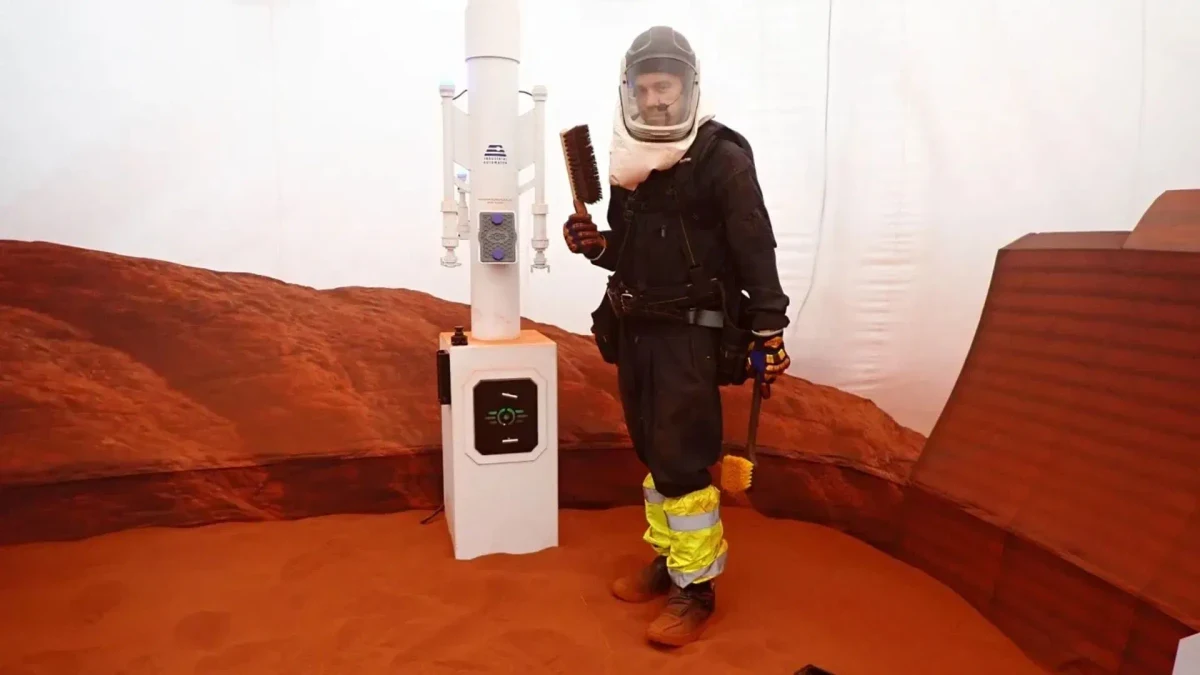
Four volunteers who spent 378 days inside the NASA‑built Mars Dune Alpha habitat at Houston’s Johnson Space Center finally stepped outside on Saturday, Oct. 31, closing the agency’s second year‑long Mars surface simulation.
During the experiment the crew lived and worked in a roughly 1,700‑square‑foot, 3‑D‑printed habitat, a self‑contained environment designed to mirror the isolation, confinement, and lack of external sensory input expected on the Martian surface.
NASA will analyze the health, performance, and psychological data gathered during the mission to refine spacecraft design, mission protocols, and crew training programs in preparation for crewed Mars missions slated for the 2030s.
Sources1
Reporting and evidence linked in this story.
Claim connections2
The four volunteers who lived and worked in a simulated NASA Mars mission for more than a year exited their habitat on Saturday, Oct. 31, after 378 days of isolation in a facility at the agency’s Johnson Space Center in Houston.
confirmedConnected sources1
Health and performance data collected from the simulation can help NASA develop methods to improve spacecraft design, mission protocols, and crew training for future Mars missions.
attributed