OpenAI Activates Election Operations Center for 2026 Midterms Amid AI Disinformation Fears
OpenAI will staff a dedicated monitoring team on November 3 to combat AI misuse and support election integrity. The move follows a 2024 industry pledge to address disinformation risks that remain a central concern for voters and tech executives alike.
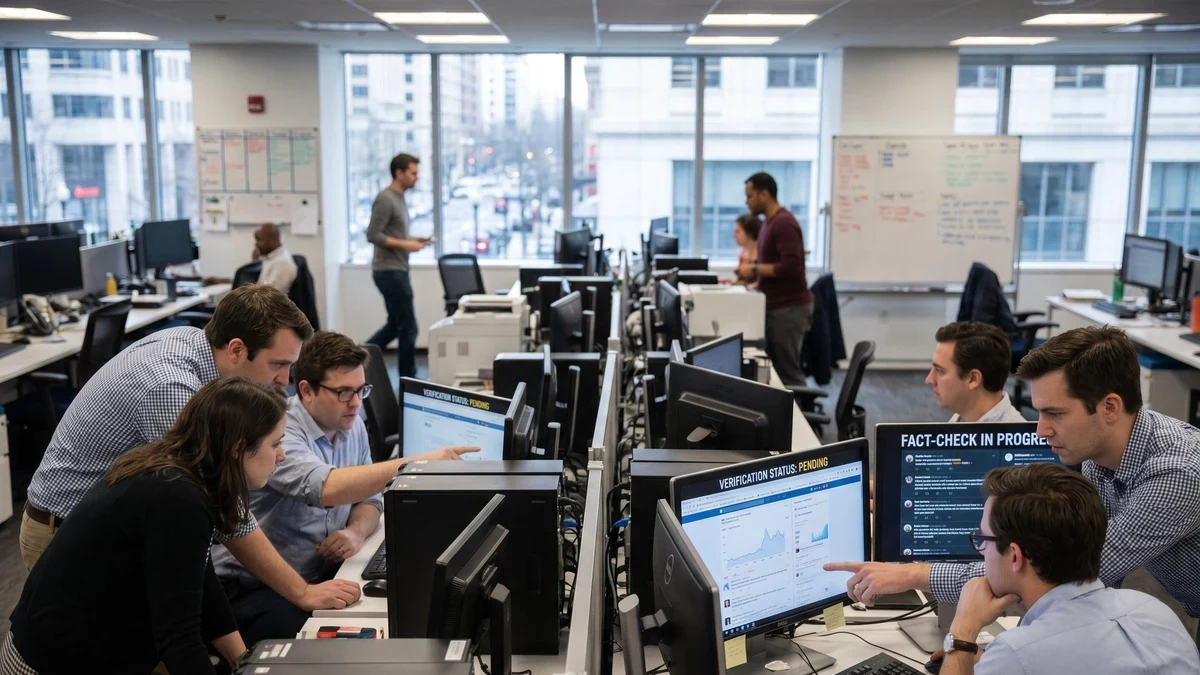
OpenAI has established an Election Operations Center, convening a select group of employees on November 3 to monitor the platform and mitigate the misuse of its artificial intelligence models. Josh Lawson, the company's head of civic and strategic risk, told Politico that the initiative aims to secure reliable voting information for users and enforce corporate policies as a national election takes place. He stated the center is designed to respond quickly to emerging issues and support election defenders during the period when millions of citizens head to the polls.
The development reflects a broader commitment to election security initiated during the 2024 presidential cycle, when a coalition of major technology firms pledged to counter generative AI threats. The resulting industry agreement mandated increased public education, the adoption of transparent AI policies, and the development of robust detection tools to limit the spread of political deepfakes. OpenAI's new operations team is intended to serve as a practical extension of those long-standing institutional efforts during the 2026 national elections.
Industry and research groups point to persistent systemic flaws that continue to undermine the reliability of online voting tools. Misinformation watchdog NewsGuard reported that foreign government campaigns targeting elections have grown in scale, primarily operating through major social media networks. The organization found that over half of Americans were successfully deceived by such fabricated content, while X's Community Notes tool failed to flag over 93 percent of the offending posts.
Specific vulnerabilities in image-generation systems have further complicated AI safety standards. The Brennan Center for Justice identified systemic failures in the guardrails of major AI models, noting that systems from Google and Meta allowed the creation of fake election images, while ChatGPT showed only partial improvement in curbing photorealistic outputs. Conversely, separate NewsGuard tests found that OpenAI's latest image model still repeatedly produced lifelike depictions of political candidates. Alongside Microsoft's voter education programs and Meta's $30 billion security investment, these technical results are shaping how the tech sector approaches the November 3 national elections.
Sources3
Reporting and evidence linked in this story.
- MashableOpenAI launching election war room
- www.foxnews.comFlorida 2026 Midterm Election Results
- www.foxnews.comSouth Dakota 2026 Midterm Election Results
Claim connections5
OpenAI is convening a select group of employees on November 3 for an Election Operations Center dedicated to monitoring potential AI misuse.
confirmedConnected sources1
Josh Lawson, OpenAI's head of civic and strategic risk, stated that the center aims to provide reliable voting information, combat tool misuse, and support election defenders.
confirmedConnected sources1
NewsGuard research identified that foreign-directed disinformation campaigns increased ahead of the election, with over half of Americans fooled by the content and X's Community Notes failing to flag more than 93 percent of the posts.
attributedConnected sources1
A Brennan Center for Justice report found that guardrails in Gemini and Meta AI failed to prevent the generation of fake election images, though ChatGPT showed some improvement in curbing photorealistic outputs.
attributedConnected sources1
Other tech companies have diverted resources to election integrity, including Microsoft's AI literacy initiatives and Meta's $30 billion spend on security.
confirmed