Scientists Replicate 1,600-Year-Old Roman Color-Changing Glass Technology
Researchers have discovered how to replicate the ancient nanotechnology behind the fourth-century C.E. Lycurgus Cup, which shifts colors depending on how it is lit.
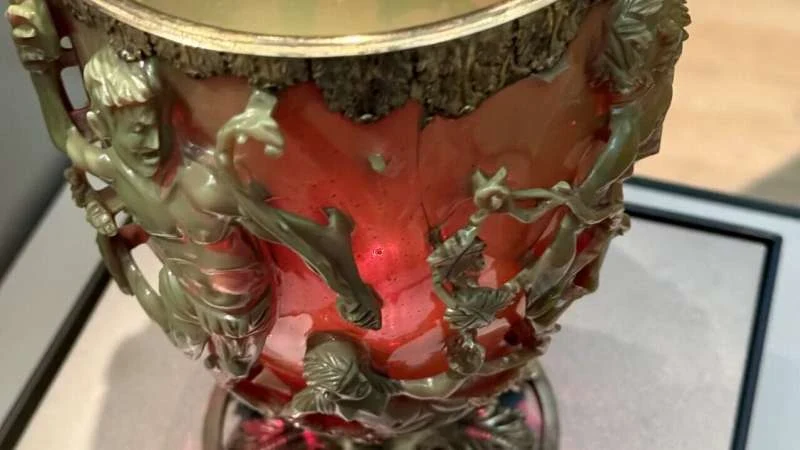
Researchers have successfully figured out how to replicate the ancient nanotechnology used by Romans to create color-changing glass. The technique mirrors the properties of the fourth-century C.E. Lycurgus Cup, a remarkable artifact that displays distinct visual shifts depending on lighting conditions.
The historical chalice appears opaque green when viewed under reflected light, but transforms into a striking wine red when illuminated directly from within or behind. Scientists studying the artifact have now uncovered the precise methods behind this ancient optical marvel.
Sources1
Reporting and evidence linked in this story.
Claim connections2
The Lycurgus Cup is a chalice from the fourth century C.E. that appears opaque green under reflected light but wine red when lit directly.
confirmedConnected sources1
Researchers have discovered how to replicate the 1,600-year-old marvel of Roman color-changing glass made with ancient nanotechnology.
confirmed