US-China Trade Truce Masks Deepening Supply Chain and Technology Rivalry
A temporary ceasefire in tariffs between Washington and Beijing has not resolved the underlying competition, as both nations redirect their efforts toward controlling critical supply chains and advanced technology dominance.
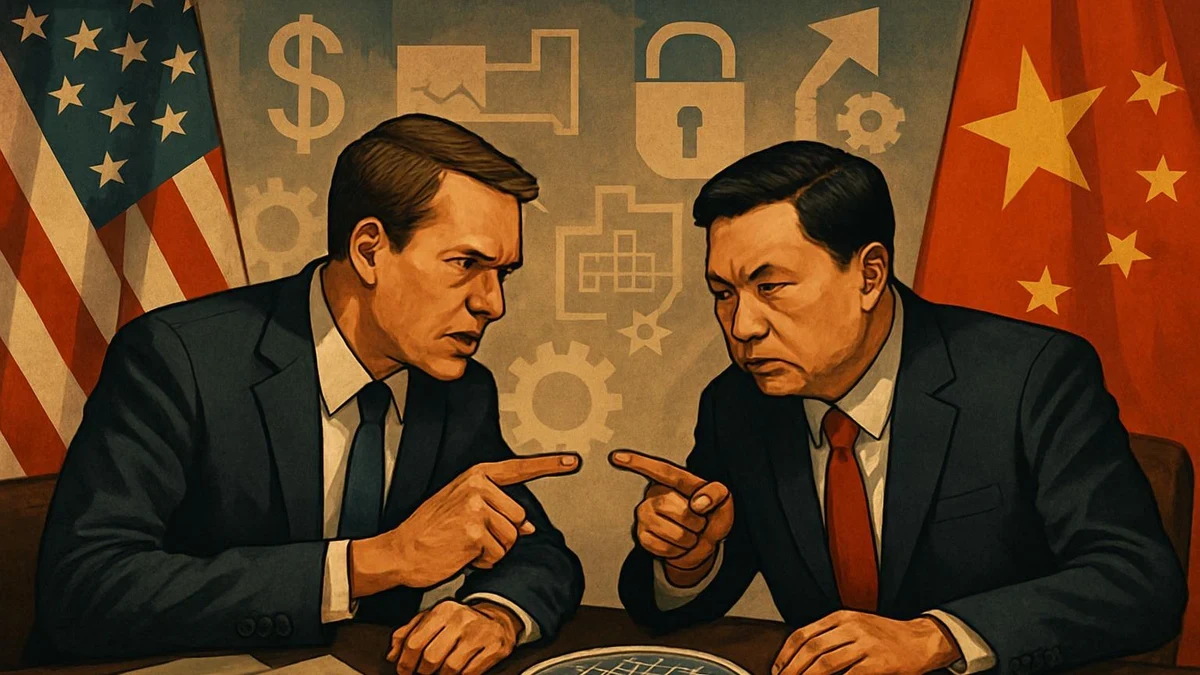
The public visibility of US-China trade tensions has diminished since Donald Trump's presidency, yet the underlying rivalry is intensifying rather than receding. What appeared as a de-escalation following a truce extended through January is masking a strategic pivot toward supply chain control and technological supremacy. Both nations have failed to construct the confidence-building measures that might prevent future escalation, instead treating economic positioning as a core national security imperative.
The conflict has moved well beyond the initial framework described by former national security adviser Jake Sullivan, who outlined a strategy to restrict China's access to specific advanced technologies with military applications while preserving broader economic ties. That narrow approach has given way to comprehensive restrictions on technology exports, investments, and transfers that now affect China's overall technological advancement. Washington has expanded controls substantially over the past five years.
China has responded by weaponizing its position in critical mineral supplies, notably demonstrating this capability last year when it restricted rare earth and magnet exports in retaliation for US tariff actions and semiconductor equipment restrictions. While some controls were later relaxed, Beijing maintains significant leverage over materials essential to high-tech manufacturing and defense production.
The transformation represents a fundamental shift in how trade functions internationally. Where economic interdependence was once viewed as a stabilizing force preventing conflict, it is now treated as a vulnerability to be managed and exploited. As both superpowers compete for dominance in next-generation technologies, trade policy has become an instrument of strategic competition rather than cooperation.
Sources1
Reporting and evidence linked in this story.
Claim connections5
The public visibility of US-China trade tensions has diminished since Donald Trump's presidency.
confirmedConnected sources1
A temporary ceasefire in tariffs between Washington and Beijing has not resolved the underlying competition.
confirmedConnected sources1
Former national security adviser Jake Sullivan outlined a strategy to restrict China's access to specific advanced technologies with military applications while preserving broader economic ties.
confirmedConnected sources1
China demonstrated leverage over critical mineral supplies last year by restricting rare earth and magnet exports in retaliation for US tariff actions and semiconductor equipment restrictions.
confirmedConnected sources1
Trade policy has become an instrument of strategic competition rather than cooperation between the United States and China.
confirmed