US Housing Cools as Rates Spike; IMF Sees Resilient Global Growth Despite Inflation
High mortgage rates are dampening US homebuying interest in places like Pinellas County, even as the International Monetary Fund forecasts 3.4% global growth by 2027 while cautioning about sticky inflation and debt.
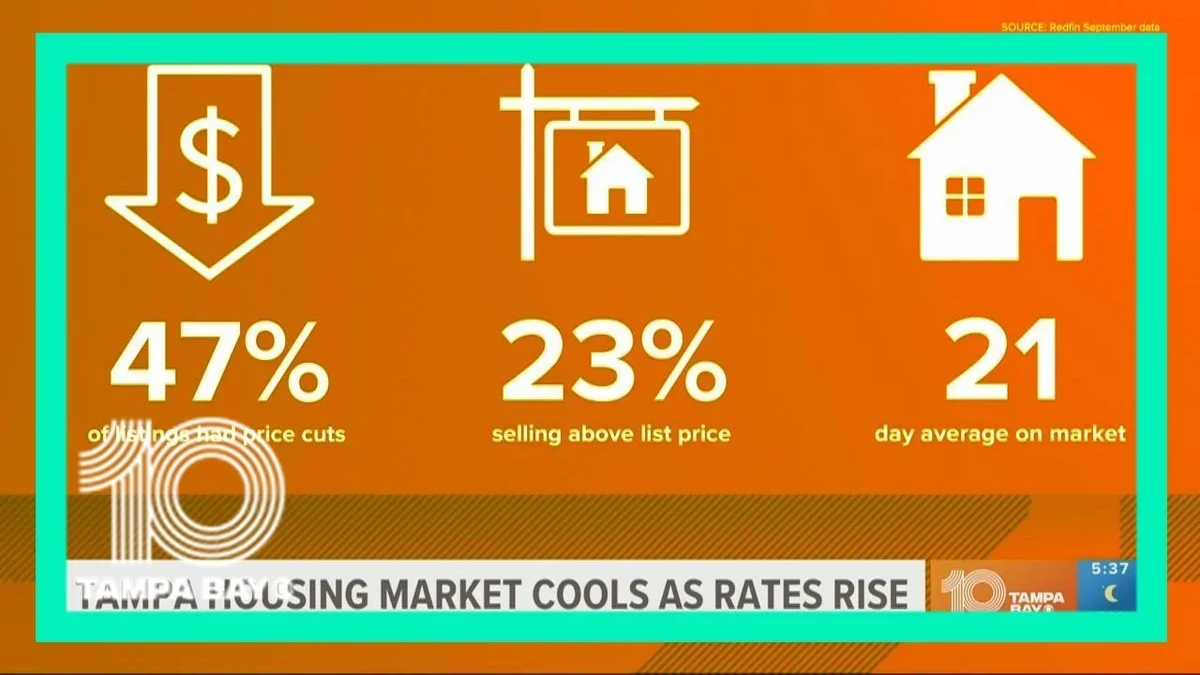
In the United States, the Federal Reserve has raised interest rates for the first time in over three years to combat rising inflation, pushing average 30-year fixed mortgage rates to between 7 and 7.25 percent. This monetary shift is chilling the local real estate market in Pinellas County, where professionals report that high borrowing costs are discouring prospective buyers. Ben Mallah, a real estate operator with a portfolio spanning retail, hospitality, and residential properties, noted that finding a buyer in this environment is very difficult, with the few active buyers seeking fire sales.
Despite the demand freeze, some agents suggest that reduced competition may offer a silver lining for those still active in the market. Unlike the 2020 to 2022 period, which saw low rates drive intense bidding wars and waived contingencies, the current landscape features fewer buyers and potentially lower transaction prices. Mallah indicated that market stability may only return if interest rates decrease and oil prices affordably decline, aligning the real estate sector more closely with the broader economic conditions.
On a global scale, the International Monetary Fund projects that world economic output will expand by 3.4% by 2027, signaling resilience in the global economy. However, the fund cautions that this outlook is complicated by rising national debt and persistent inflation. The IMF highlighted that inflation remains above central bank targets in several regions, including the Eurozone, Australia, and India, which is tightening fiscal space and limiting the ability of governments to stimulate economic growth through public spending.
For emerging markets, particularly India, global financial tightening poses specific risks. Sticky inflation pressures local central banks to maintain higher interest rates, which in turn increases the interest burden on domestic companies and can squeeze profit margins. Furthermore, the IMF noted that rising international bond yields, driven by concerns over government debt sustainability, can cause volatility in foreign capital flows, creating a complex environment for investors navigating both domestic and global macroeconomic challenges.
Sources3
Original reporting and primary evidence.
- MarketWatch — Top StoriesStocks are heading for a high-stakes showdown, as strong earnings collide with rising borrowing costs
- baynews9.comRising interest rates impact real estate market
- www.whalesbook.comIMF Projects 3.4% Global Growth by 2027: Impact on India
Claim connections4
The Federal Reserve recently raised interest rates for the first time in more than three years, causing average 30-year fixed mortgage rates to rise between 7 and 7.25 percent.
confirmedConnected sources1
Ben Mallah, a real estate professional, stated that finding a buyer in the current high-rate market is very difficult and that active buyers are looking for fire sales.
confirmedConnected sources1
The International Monetary Fund projects that global economic output will expand by 3.4% by 2027, despite rising national debt and persistent inflation.
confirmedConnected sources1
The IMF report highlighted that inflation remains above central bank targets in several regions, including India, Australia, and the Eurozone.
confirmed